From research questions to real-world application
The Center investigates materials, tests building systems, develops hands-on learning experiences and connects timber innovation with forests, industry and communities.
Our work is organized around three areas: Research, Education and Community-Engaged Action. Each offers a different way to explore what timber can do and how new knowledge can move into practice.
Research

Testing what timber can do
Research at the Center focuses on questions that can lead to better materials, structural systems and real-world applications. We work across scales, from material performance and fabrication to building assemblies and full-size prototypes.
Areas we explore
- Performance and material innovation in engineered wood products
- Carbon, seismic performance and efficiency across the building lifecycle
- Timber assemblies and structural systems
- Responsible sourcing and sustainable forestry
- Applied research with industry, government and professional partners
Research spotlight
Building at a larger scale
Our research is supported by a world-class Fabrication Lab that brings traditional making and advanced digital fabrication together. The Center is expanding its capacity for large-scale timber prototyping, helping ideas move from material studies and digital models into full-size assemblies. That added capacity creates new opportunities to explore connections, structural systems and fabrication methods at building scale.
Education
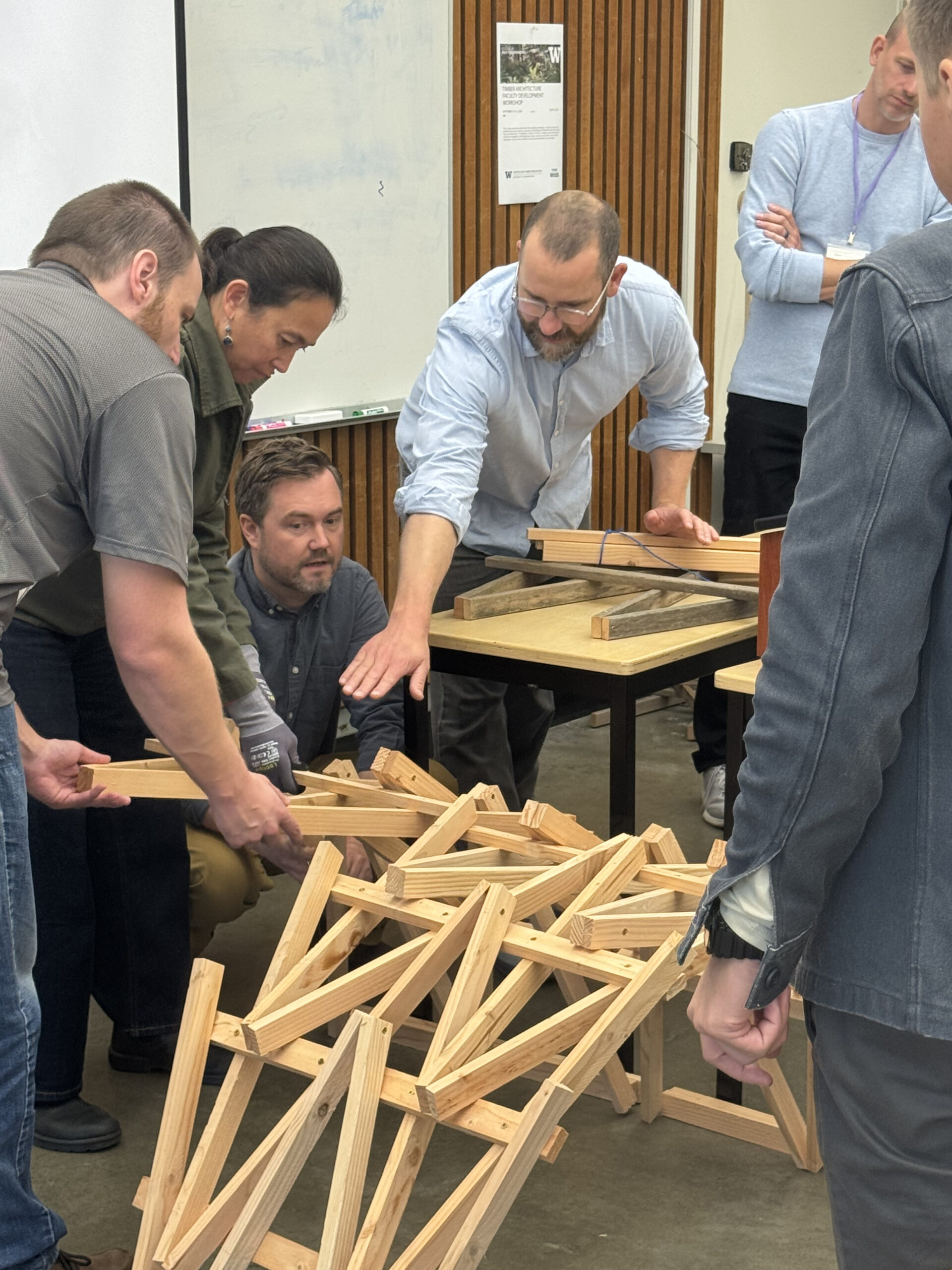
Learning by making
Students learn timber differently when they can work with the material directly. The Center connects classroom learning with fabrication, construction, professional practice and the systems that shape timber before it reaches a building.
How students learn
- Studios connecting design, engineering, forestry and policy
- Hands-on fabrication and design-build projects
- Full-scale structural experimentation
- Forest, manufacturing and project site visits
- Learning alongside practitioners and industry partners
- Internships, mentorship and other professional learning opportunities
Education spotlight
Timber Wave
In the 2025 Barry Onouye Endowed Studio, graduate architecture students worked with StructureCraft to design and build Timber Wave, a full-scale pavilion using Washington-grown timber. Inspired by a Leonardo da Vinci sketch, the team developed a reciprocal structural system of interlocking “W” modules that could support itself during assembly without temporary scaffolding. Rising more than nine feet and spanning more than 28 feet, the finished pavilion explored structural performance, craftsmanship and circular design through minimal cutting and reversible connections that preserved the timber for future reuse.
Community-Engaged Action
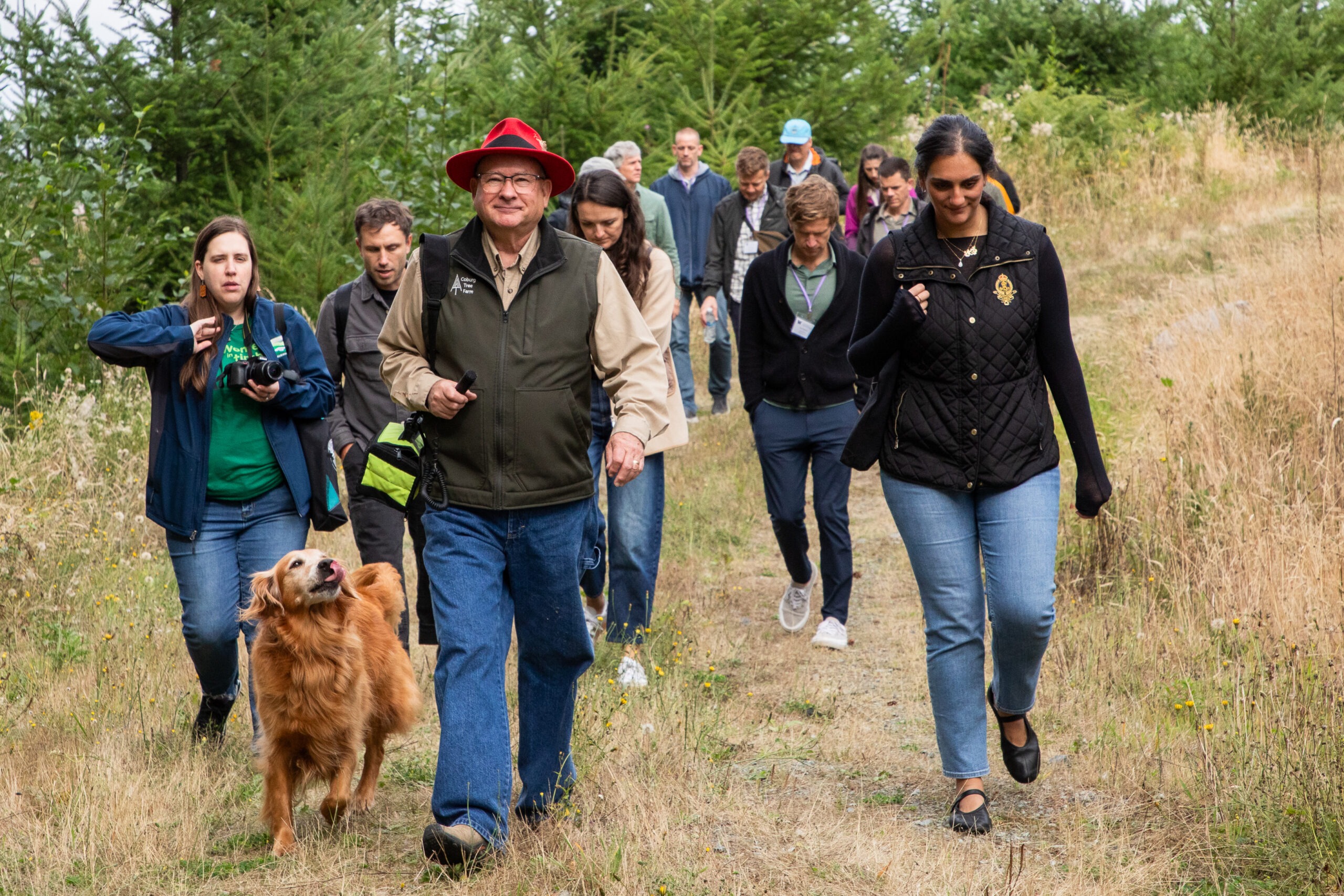
Connecting timber with place
Timber does not begin at the building site. The Center connects design and construction with the forests, producers, communities and regional economies that shape the material before it reaches a project.
What this work includes
- Forest stewardship and responsible sourcing
- Site visits and place-based learning
- Collaboration with timber producers and landowners
- Partnerships with municipalities, nonprofits and communities
- Connections between regional economies and the built environment
- Dialogue with professional and industry partners
Community spotlight
Following the material
The Center approaches timber as more than a building material. It is part of a system connecting forests, manufacturing, design and use. That story is visible in the CBE Fab Lab, where work tables made from CLT that began as coastal western hemlock from sustainably managed Makah Tribal forestland were fabricated by the Composite Recycling Technology Center (CRTC) and then donated to the Center. Today, the tables support student making and timber research, bringing the full forest-to-fabrication story directly into the learning environment.
Help shape what comes next
Bring a research question, project idea, material, site or area of expertise. The Center creates opportunities to explore what is possible together.